Religious Diversity in Minnesota Initiative







About the Religious Diversity in Minnesota Initiative
The Religious Diversity in Minnesota Initiative brings together scholars specialized in a range of religious traditions with Minnesota’s communities and professional organizations to help Minnesotans navigate challenges, promote greater religious literacy, foster nuanced and informed public conversation about and across religious difference, and provide publicly accessible web-based and local resources to support that effort. Rather than keep the rich knowledge and wealth of research within the confines of the academy, this project seeks to promote collaborations with community partners to help Minnesota communities access and leverage scholarly resources for public good.
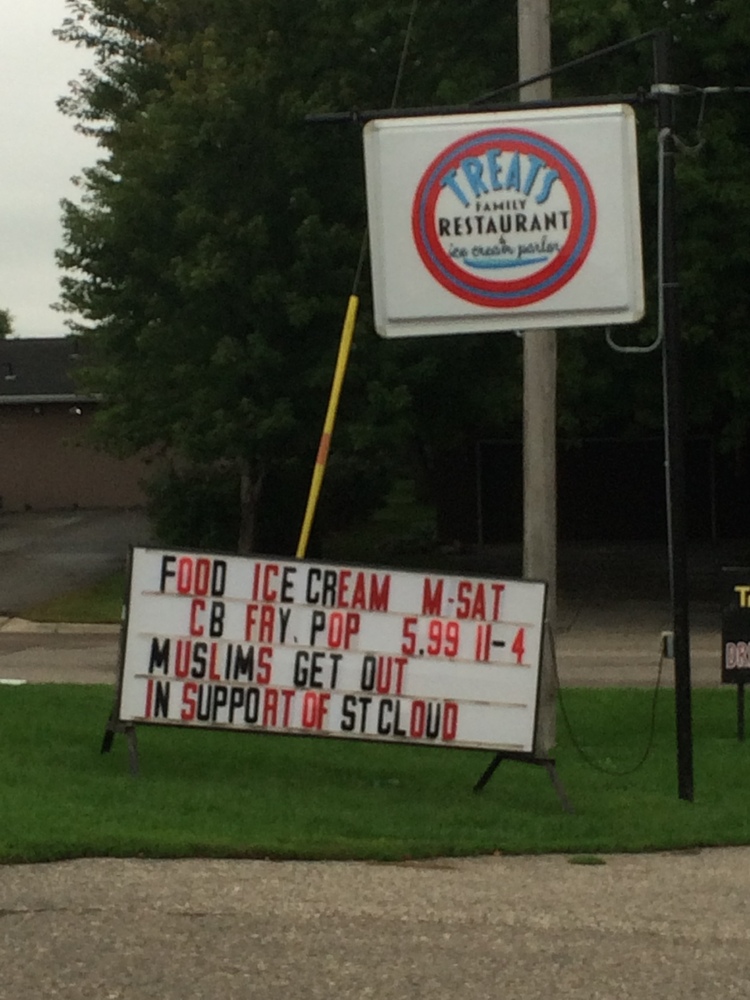
The 2016 election confirmed it anew: Minnesota is no outlier to the divisions in America. In November of 2016, the first Somali Muslim woman, Ilhan Omar, who now the first Somali, first refugee, and one of the first two Muslim women to serve in Congress, was elected to serve in the Minnesota State Legislature. Her landslide election, in the overwhelmingly democratic neighborhood, happened at the same moment as Donald Trump was elected to the presidency. Just two days before their victories, Trump spoke to a large crowd at the MSP airport, saying: “Here in Minnesota, you’ve seen firsthand the problems caused with faulty refugee vetting, with large numbers of Somali refugees coming into your state…without your support…with some of them…joining ISIS and spreading their extremist views all over our country….” These sentiments, which found enthusiastic supporters among some in the state, reveal the wide-range of perspectives about immigrants in Minnesota. Like Americans generally, Minnesotans find themselves neighbors with people they not only don’t know, but feel they can never understand. The divides are racial, ethnic, economic, generational and geographical in nature, but they are increasingly and crucially religious. Talk of registering Muslim neighbors simply because of their religion has found disturbing traction in the mainstream of public discourse. By turns, Evangelical Christians of a wide array of political, social, and theological positions are lumped together as though they think and act as a single entity. The particular circumstances, histories, and nuanced perspectives that shape Minnesota's diverse communities are often lost in a sea of generalization.
At the same time as Minnesotans are like the nation as a whole, we are outliers in terms of our social and civic capacities to address these challenges. Whether measured by electoral participation, volunteerism, charitable giving, or refugee resettlement, Minnesota enjoys an enviable capacity for civic engagement and an ethos of neighborliness that, fragile as the might be in these times, can be commended and drawn upon as a powerful resource for healing divisions in the current climate.
The Religious Diversity in Minnesota Initiative aspires to address the challenges of religious difference by tapping into this ethos of neighborliness and nurturing it through accessible public scholarship that helps Minnesotans understand one another’s religious commitments in all their difference and commonality. We believe this endeavor to be all the more important as we continue to see profound changes in Minnesota’s religious landscape coupled with an increasingly charged political climate over religious and ethnic difference.
The visibility and pace of these changes have generated enormous tensions in civic life, as workplaces, public spaces, schoolrooms, hospitals, and courtrooms contend with new realities and unexamined assumptions. Minnesota’s religious and ethnic communities have found themselves, often for the first time, in the position of having to educate others about their religious beliefs and practices. Navigating cultural and religious difference presents on-going and ever-shifting challenges and we hope this project helps, in some small way, to address them.