Franciscan Rome: San Cosimato

Dublin Core
Title
Subject
Description
Founded in the 10th century as a Benedictine monastery, the convent of San Cosimato came into the possession of the Franciscans in 1234, when Pope Gregory IV ordered the Benedictines to give the space to the Clares, an order of Franciscan nuns. San Cosimato became the first female Franciscan convent in Rome, and remained an integral part of the growing network of Franciscans in and around Rome for centuries. The existing sources about the convent’s history come from chronicles and records written and kept by the nuns; the most complete chronical was written by Suor Orsola Formici in the sixteenth century. It is necessary to note that while women carved both religious and intellectual spaces for themselves at Cosimato, male Franciscans still held the power to make decisions on behalf of the women- female subservience was expected.
Cosimato experienced a busy 15th and 16th century. In 1451, a shuffling around of Clarison convents took place, and Cosimato was re-staffed with nuns from central Italy. In 1439, and again in 1456, papal bulls brought Clarison convents under the auspices of the papacy, which resulted in the Pope and the Franciscan order sharing authority over the Clares. This lead to a closer relationship between the convent, and Franciscans as a whole, with the papacy, and demonstrated the growing popularity and power of the Franciscan movement.
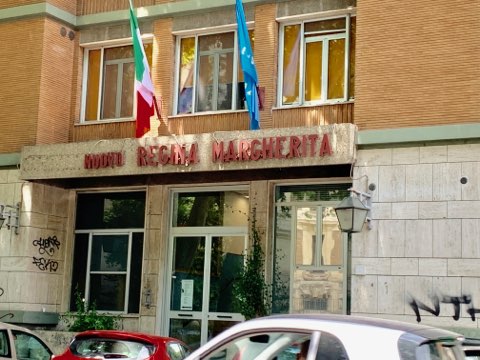
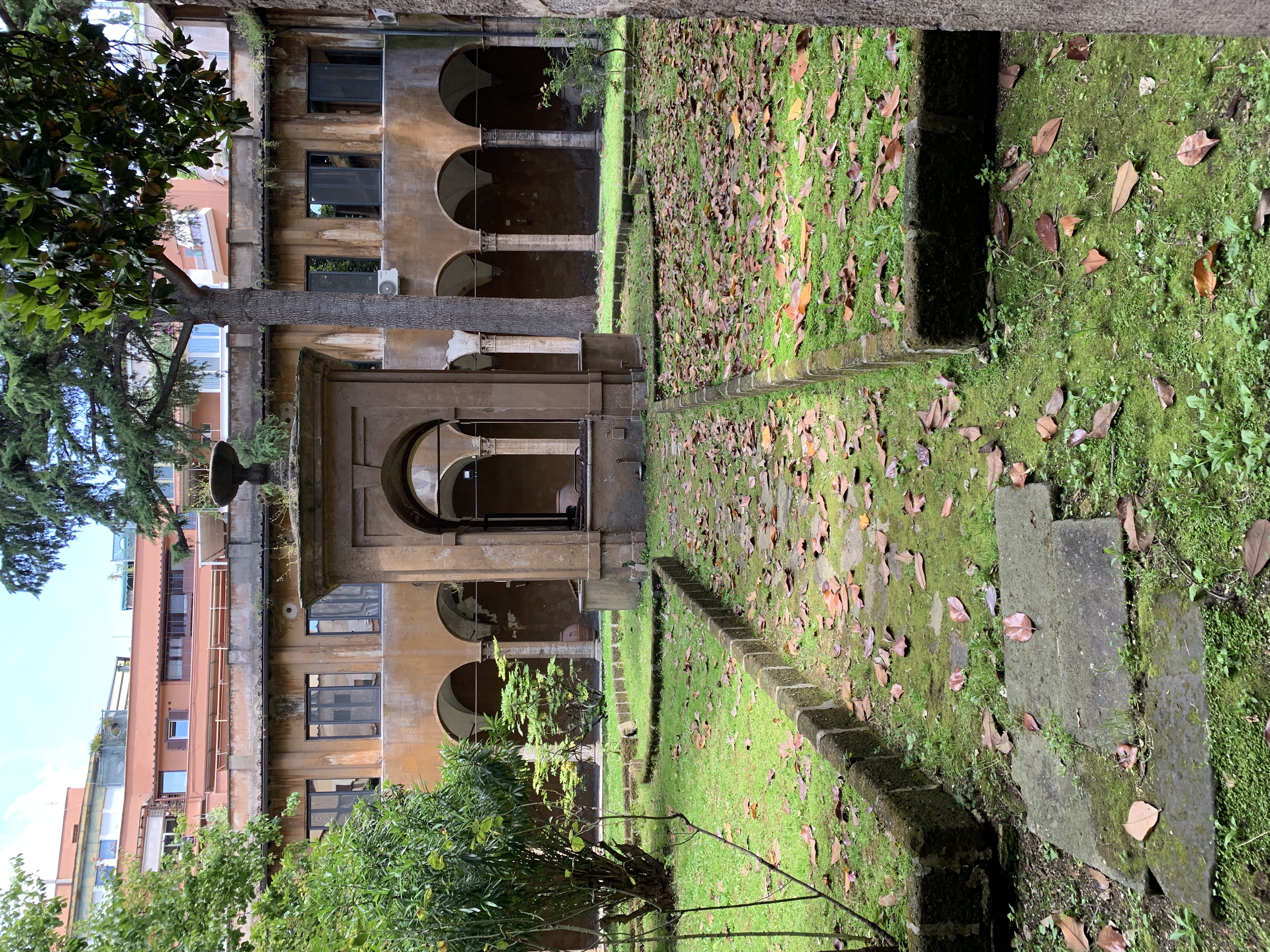
A peak of this close relationship with the papacy occurred in 1471, with the patronage of the first Franciscan pope, Pope Sixtus the IV. Pope Sixtus invested heavily in San Cosimato, supposedly funding a second cloister and a campanile and financing repairs around 1475. Sixtus’ building projects and the original medieval façade can still be seen today, in the hospice care unit of Nuova Regina Margharita Ospitale.
As a result of the patronage of Sixtus and the continued popularity of Franciscan-ism, Cosimato experienced a population increase from 12 in 1451, to 70 in 1521. Considered models of good behavior, the nuns of Cosimato were often sent to other convents to reform them. On a final note, San Cosimato was broken into and robbed during the 1527 sack of Rome. Though the nuns sought refuge at San Silvestro, invaluable records were destroyed during the robbery, significantly affecting the number of primary sources now available on the convent’s history.
Creator
Source
Lowe, Kate. "Franciscan and Papal Patronage at the Clarissan Convent of San Cosimato in Trastevere, 1440–1560." Papers of the British School at Rome 68 (2000): 217-39. http://www.jstor.org/stable/40311030.